A look at India’s e-waste regulations and what you can do to manage your e-waste
Waste management, especially when it comes to plastic, has been given much attention over the years in the country. Plastics took centre stage in the country’s discourse on environmental conservation this World Environment Day. Still, somehow, the issue of e-waste, which is among the most dangerous kinds of waste — for it contains heavy metals and other toxic chemicals — remains insidious.
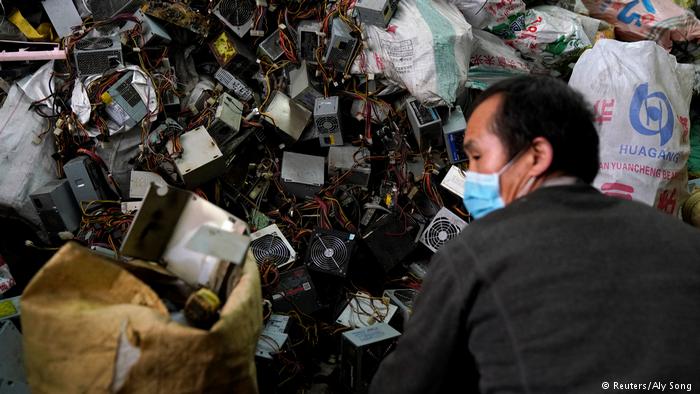
Even today, when India is among the world’s largest consumer of mobile phones with 1.5 million tonnes of e-waste generated in 2015, most consumers are still unaware of how to dispose of their e-waste. Most Indians end up selling their e-waste to the informal sector, which poses severe threats to human (including children’s) lives, with its improper and highly hazardous methods of extracting the trace amounts of precious metal from it and handling e-waste for profit.
The government passed the first law on e-waste management in 2011, based on Extended Producer Responsibility (EPR), which put the onus on the producer for the management of the final stages of the life of its product, in an eco-friendly way, by creating certain norms in tandem with state pollution control boards. However, it did not set collection targets; this was amended in the new law, passed two years ago.
The suggestion for step-by-step guide for a citizen who wants to dispose of his electronic gadget (phone/TV/laptop/anything else) in the right way:
Effective awareness would be the right step for all stakeholders. As per the rule, manufacturers have been mandated to create awareness in the country.
The Ministry of Electronics and Information Technology, MeitY, has initiated an E-waste Awareness programme under Digital India initiatives, along with industry associations from 2015, to create awareness among the public about the hazards of e-waste recycling by the unorganised sector, and to educate them about alternate methods of disposing of their e-waste.
The programme stresses the need for adopting environmentally friendly e-waste recycling practices. The general public is also encouraged to participate in ‘Swachh Digital Bharat’, by giving their e-waste to authorised recyclers only.
The programme has adopted the best practices for e-waste recycling available globally, so that this sector could generate jobs as well as viable business prospects for locals. In the initial phase of the programme, a city each in the 10 identified states (namely Madhya Pradesh, Uttar Pradesh, Jharkhand, Orissa, Goa, Bihar, Pondicherry, West Bengal, Assam and Manipur) are being covered. The stakeholders involved are schools, colleges, Residents’ Welfare Associations (RWAs), bulk consumers, regulatory bodies, and the media.
So far, a total of 1,23,087 participants from schools, colleges, RWAs, manufacturers, refurbishers, informal operators to 2273 government officials have participated in various cities. A dedicated website (www.greene.gov.in), Twitter handle and Facebook page have been created in order to spread awareness through social media. Besides, ‘E-Waste Mass Awareness Campaign through Cinema’ has also been initiated for awareness amongst the youth. An audience of nearly 7.6 crores has been covered in around 815 theatres. The second phase has been initiated, with 20 more states, including Andhra Pradesh, Andaman and Nicobar Islands, Chhattisgarh, Daman and Diu, Delhi, Gujarat, Haryana, Himachal Pradesh, Karnataka, Kerala, Lakshadweep, Maharashtra, Meghalaya, Punjab, Rajasthan, Sikkim, Tamil Nadu, Telangana, Tripura and Uttarakhand.
Highlight of the importance of e-waste management in India:
E-waste is growing at a compound annual growth rate (CAGR) of about 30% in the country. Assocham estimated that e-waste generation was 1.8 million metric tonnes (MT) per annum in 2016 and would reach 5.2 million metric tonnes per annum by 2020. Unless we have effective implementation of the rule, the country would end up creating many such informal processing hubs such as those in Moradabad and Seelampur, where soil, water and air are polluted to a beyond-repairable level. Strict implementation of the rule, creating adequate awareness, training for requisite skill sets and providing affordable technology to the informal sector could be a game-changer. Upgradation of the informal sector to reach environmentally acceptable operations is presently missing, and is not part of the rule.
E-waste also contains plastic, up to nearly 25% of its weight. Novel recovery and conversion of e-waste plastics to value-added products have also been successfully developed. The developed process is capable of converting a majority (76%) of the waste plastics into suitable materials, which could be used for virgin plastic products. The technology has already been transferred for commercialisation. The 1000kg PCB/day continuous process plant would be suitable for creating an eco-park in the country, whereas, the 100kg PCB/batch process plant would be suitable for the informal sector. This could be done by upgrading and transforming the present state of affairs of informal sectors to semi-formal units, with acceptable environmentally robust operations. This transformation would definitely attract more informal units to upgrade their operations for healthy, hygienic, legally acceptable livelihoods. The regulator would also then be empowered to implement the rule more stringently and close down the remaining illegal informal operations. This revolution in the country would be able to concentrate feedstock at some designated places, presently scattered across various informal sectors, which are actually demotivating the state-of-the-art recycling industry to set up their units in the country.
Please keep it offline. THX