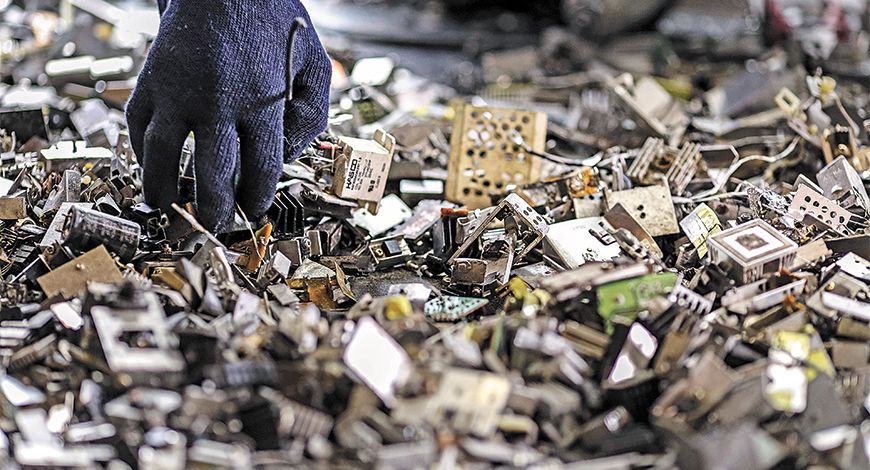
Health hazards and the importance of protective equipment while handling e-waste
The amount of e-wastes generated over the past several years has posed an ever-increasing threat to the environment and public health. As long as electronic products continue to contain toxic chemicals and are designed without the recycling aspect, they would pose a threat to the environment and public health at their end-of-life.
E-waste comprises EEE like television, refrigerator laptops, computers, mobile phones, printers, DVD players etc. which are discarded by their users as they become old or reach their end of life.
The composition of e-waste consists of Ferrous & Non-ferrous Metals Plastics, Glass, wood etc. Iron & Steel -50% Plastics -21% Non-ferrous metal -13% Mercury, Arsenic, Lead etc.
Despite 23 units currently registered with Govt. of India, Ministry of Environment and Forest / Central Pollution Control Board, as E-Waste recyclers / pre-processors the entire recycling process more or less still exists in the unorganized sector.
Many of these substances are toxic and carcinogenic, the materials are complex and have been found to be difficult to recycle in an environmentally sustainable manner causing a health hazard.
In developing countries like India people engaged in recycling e-Waste are mostly in the unorganized sector, living near dumps or landfills of untreated e-Waste and working without any protection or safeguards.
There are risks to handling e-waste, including physical injuries due to lifting, cuts from sharps, and exposure to hazardous dust and chemicals that can pose health effects. The first concern with e-waste is potential exposure to chemical dust and vapors if the products are damaged or broken apart.
Exposures to lead, mercury, cadmium, beryllium, and flame retardant compounds pose both short and long-term health effects. The risks include damage to the nervous system, reproductive system, congenital disabilities, lung disease, and thyroid problems.
To avoid the adverse effects impacting your health and well-being always wear your Personal Protective Equipment (PPE); hand gloves and face mask when you work with e-waste:
Sturdy work gloves protect your hands from cuts and scrapes while you move and store equipment.
Chemical-resistant disposable gloves prevent skin contact with harmful dust and chemicals.
Consider using a face mask, depending on the area ventilation and type of operation, to protect against harmful dust and fumes.